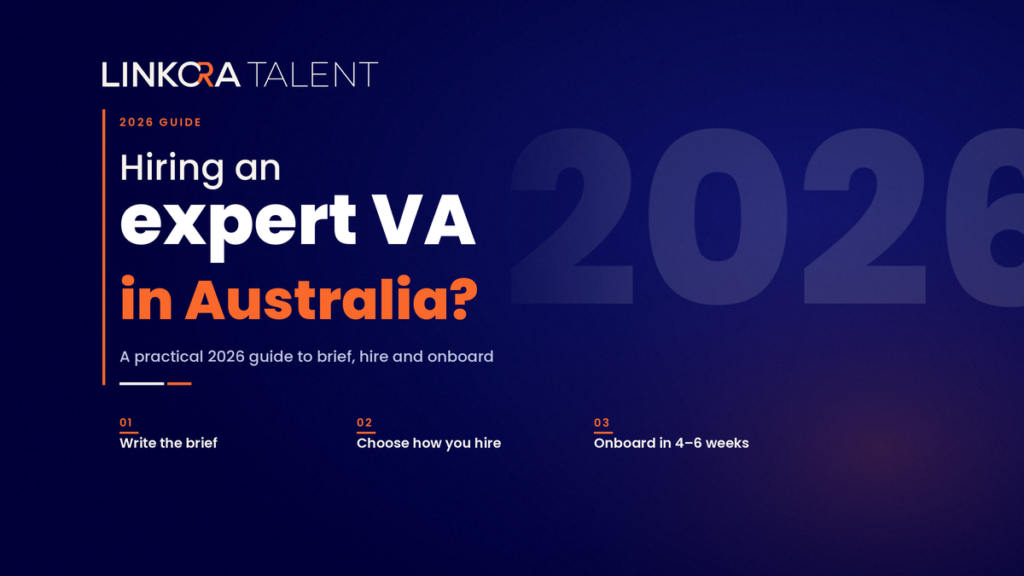
Quick answer: to hire a virtual assistant in Australia, write a short role brief, pick how you’ll hire (marketplace, recruitment agency or managed VA service), meet the person before you commit, and then give onboarding a proper four to six weeks. An expert VA isn’t really about a perfect CV. It’s about a clearly defined role and someone staying accountable after day one.
Why Australian businesses are hiring virtual assistants in 2026
The pattern is familiar for a lot of owners. The admin lands on the most capable person in the business, and that’s usually you.
Inbox triage, invoice chasing, bookings and report formatting creep into evenings and weekends. A busy clinic might be juggling appointment reminders and billing follow-up. A small agency might be stuck formatting reports when it should be talking to clients. And quarterly BAS and end of financial year tend to make it all heavier.
Hiring locally for 20 hours of admin a week rarely stacks up. That’s why more owners decide to hire a virtual assistant in Australia’s time zones and working rhythm instead. But it only works if the arrangement’s set up properly, and honestly, that’s where a lot of people go wrong.
Step 1: Define the role before you look for a person
“We need someone to help with admin” is a fair place to start. It just isn’t a brief.
What to include in a VA role brief
Write down the actual tasks (inbox triage, calendar wrangling, claims follow-up, proposal formatting), roughly how many hours you need, and which tools they’ll touch. Note what the VA owns and what stays with you. Then add the bit most people skip: what a good month looks like. If you can’t describe it, you won’t know whether it’s working. We’ve put together a longer guide on writing a virtual assistant role brief if you want a template.
Not sure what to delegate?
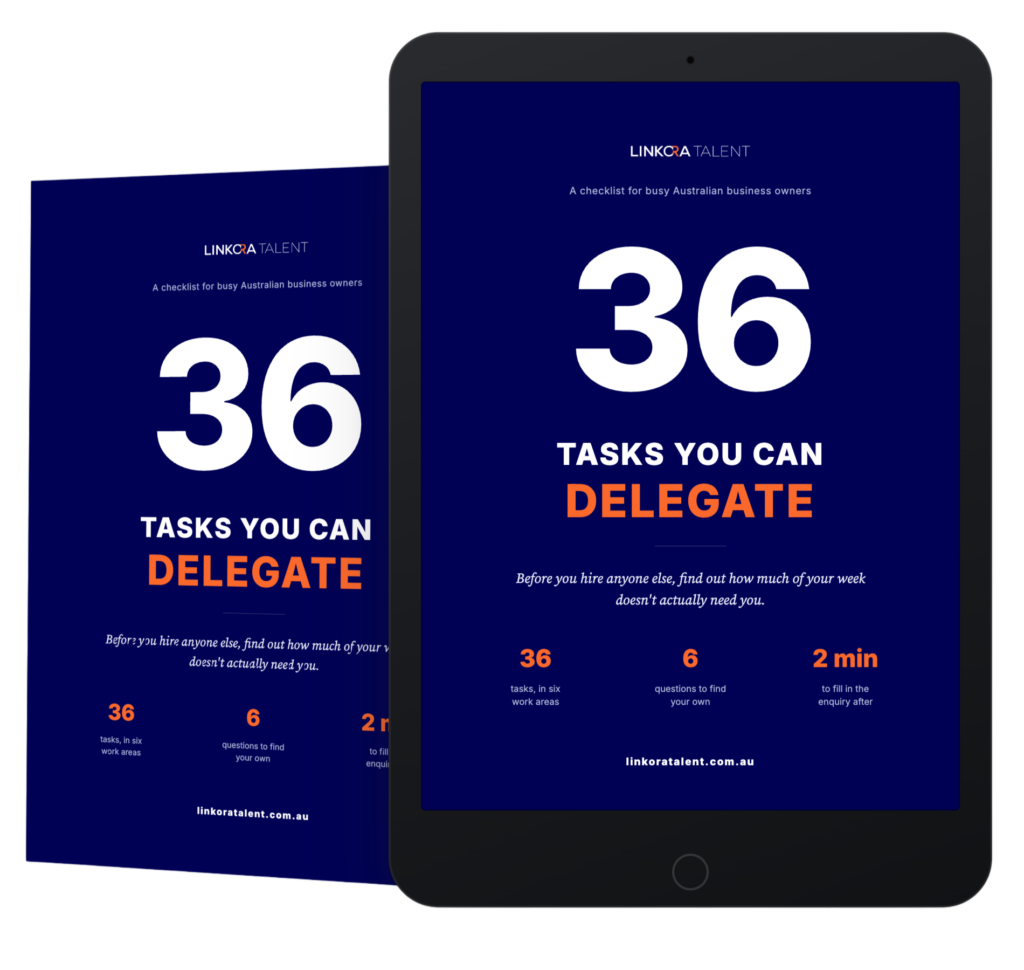
Pick three tasks. One that repeats, one that keeps slipping, and one that eats your best hours. Our free list of 36 tasks you can delegate to a virtual assistant helps turn a vague “I need help” into something you can actually hand over.
Step 2: Choose where to hire
This decision shapes everything that follows, so it’s worth ten minutes of thought.
Freelance marketplaces
A marketplace gives you a profile. That’s it. Screening, training, managing and finding cover when someone’s sick? All yours. It’s flexible, and it suits some people. Most busy owners, though, find the work quietly lands back on their desk.
Recruitment agencies
A recruiter finds you a candidate. Once they start, the agency’s job is usually done.
Managed VA services
A managed service works with you on the role, matches a VA from its own team, runs onboarding and stays accountable for the whole engagement. Your VA owns the agreed tasks. You keep the decisions. The provider keeps the whole thing running. We’re obviously biased here, but we think it’s the model that actually holds up past month three. If you’d like the long version, read our breakdown of marketplace vs agency vs managed VA service.
Step 3: What makes an “expert VA”?
It isn’t the list of software on a CV. In our experience, it comes down to four things.
First, experience that matches your brief, whether that’s clinic admin, bid support or customer service. Second, fit with how you work, which is exactly why you should meet them before signing anything. Third, a clear scope. In a medical practice, a VA handles admin and never clinical work. In a security firm, they stay in your business systems and out of client environments. And fourth, they’re comfortable with AI. A good VA uses it to draft and sort, then checks and finishes the work themselves.
Step 4: Vet and meet before you commit
Before you sign with anyone, ask a few blunt questions. Will I meet the VA first? What happens if it isn’t working? Is there a placement fee hiding somewhere? And who do I actually call once they’ve started?
With Linkora, you meet the proposed VA before anything’s signed. If the fit’s wrong, we keep looking. There’s no separate placement fee.
Step 5: Onboard properly
The match is maybe half the job. The other half is the first few weeks. Set up access with security basics and the least access the role needs. Put scope, hours and rhythm in writing. And book check-ins in the calendar rather than hoping they’ll happen.
Our onboarding runs over four to six weeks and our team stays involved the whole way. We’ve written more on why the first six weeks decide everything.
Step 6: Keep your VA
Turnover is what kills offshore arrangements. So when you compare providers, look past the hourly rate and ask how the VAs are treated. Our piece on the real cost of offshore support digs into why cheap so rarely lasts.
Linkora’s VAs get fortnightly pay and structured support, including an annual recognition payment and health-cover support for eligible VAs. They also get a named team, a clear point of contact and written expectations, working Australian business hours as standard.
Hiring a VA in Queensland and across Australia
If you’re looking to hire a VA in Queensland, it helps to work with a Queensland VA agency that understands local business hours and expectations. Linkora Talent is Australian-owned, Queensland-based and founder-led. Our founder, Aidan Lamb, is personally accountable for how the model works. We place skilled Filipino VAs with businesses right across the country, from healthcare practices and clinics handling recalls and billing follow-up, to cybersecurity firms that need help with proposals and report production, to SMEs and start-ups. So whether you want a virtual assistant Queensland businesses can rely on, or you’re interstate and simply want to hire a virtual assistant Australia-wide, the process is the same.
How much does it cost to hire a virtual assistant in Australia?
It depends on the role, the hours and the skills. With us, you tell us what you need in about two minutes through the enquiry form. Then we have one short call to scope it and confirm pricing. You don’t have to sign anything to get a price.
FAQs
What is a managed VA service?
It’s a provider that shapes the role with you, matches a VA from its own team, runs onboarding and stays accountable for the whole engagement. A marketplace or recruiter usually stops at the start date.
How many hours a week should I hire a VA for?
Most roles start around 10–20 or 20–30 hours a week. Some grow into full-time. Not sure? Working that out is part of scoping.
Can a virtual assistant work Australian business hours?
Yes. With Linkora, Australian business hours are the standard, agreed when we scope the role.
Is it safe to give a VA access to my systems?
It is if you plan it. Give the VA only the access the role needs and cover security basics in onboarding. In sensitive industries you can limit scope tightly, like admin-only work in clinics.
How long does it take a VA to get up to speed?
Plan on four to six weeks of structured onboarding, with regular check-ins while the role beds in.
Ready to hire?
If you’re ready to get some hours back, book a free strategy call with Linkora. We’d love to hear what’s on your plate. Or, if you’re still weighing things up, you’ll find more guides on our insights page.